



explores the objectification of young women and society’s conflicting attitudes towards it.
explores the objectification of young women and society’s conflicting attitudes towards it.
This website is optimized for desktop viewing; this mobile version presents a slightly reduced selection of content for clarity and readability.
This series focuses on teenage girls and young women still navigating identity formation, who are simultaneously idolized as societal beauty standards. It prompts viewers to reflect on these women’s autonomy, the emotional toll they endure, and the complexities of objectification, raising questions about whether it can ever be self-determined.
The photographer also addresses young women working as models in fashion, photography, and media, where they often face intensified pressures of objectification.
PAID DISCOMFORT accuses the viewer, who represents society, of being a voyeur and collaborator in the objectification of young women. Each artwork in the series consists of three art pieces.
My name is MIKAEL VAN LICHTBERG. I’m a photographer and visual artist and I’ll get straight to the point:
I’m presenting my first independent editorial series.
Shot on 35mm film at the Kunstmuseum Bonn in Germanys old capital, the project stages Berlin-based model KIM KNORKE in and around an actual police vehicle — styled in fashion pieces by PRADA and BALENCIAGA.
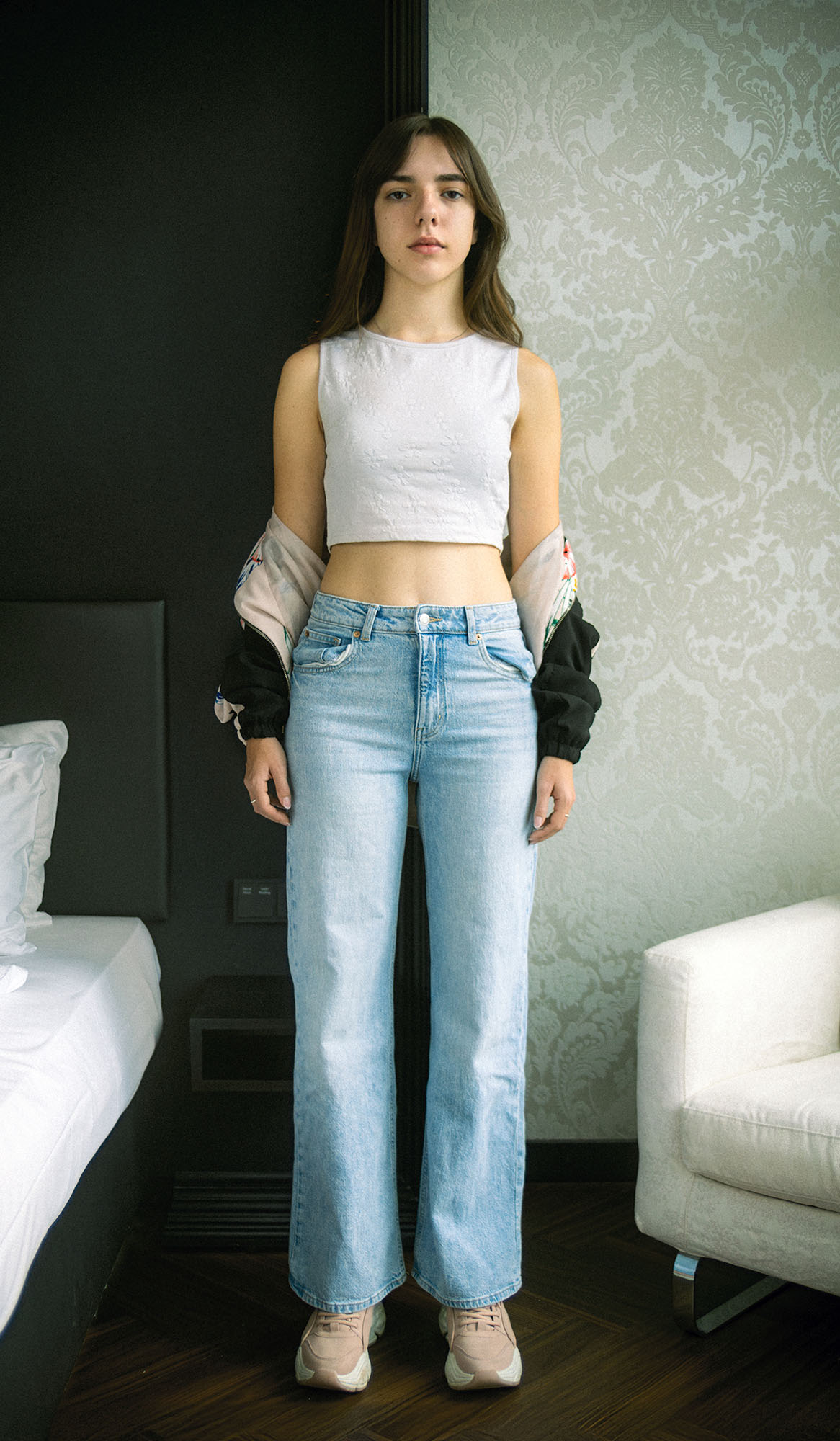
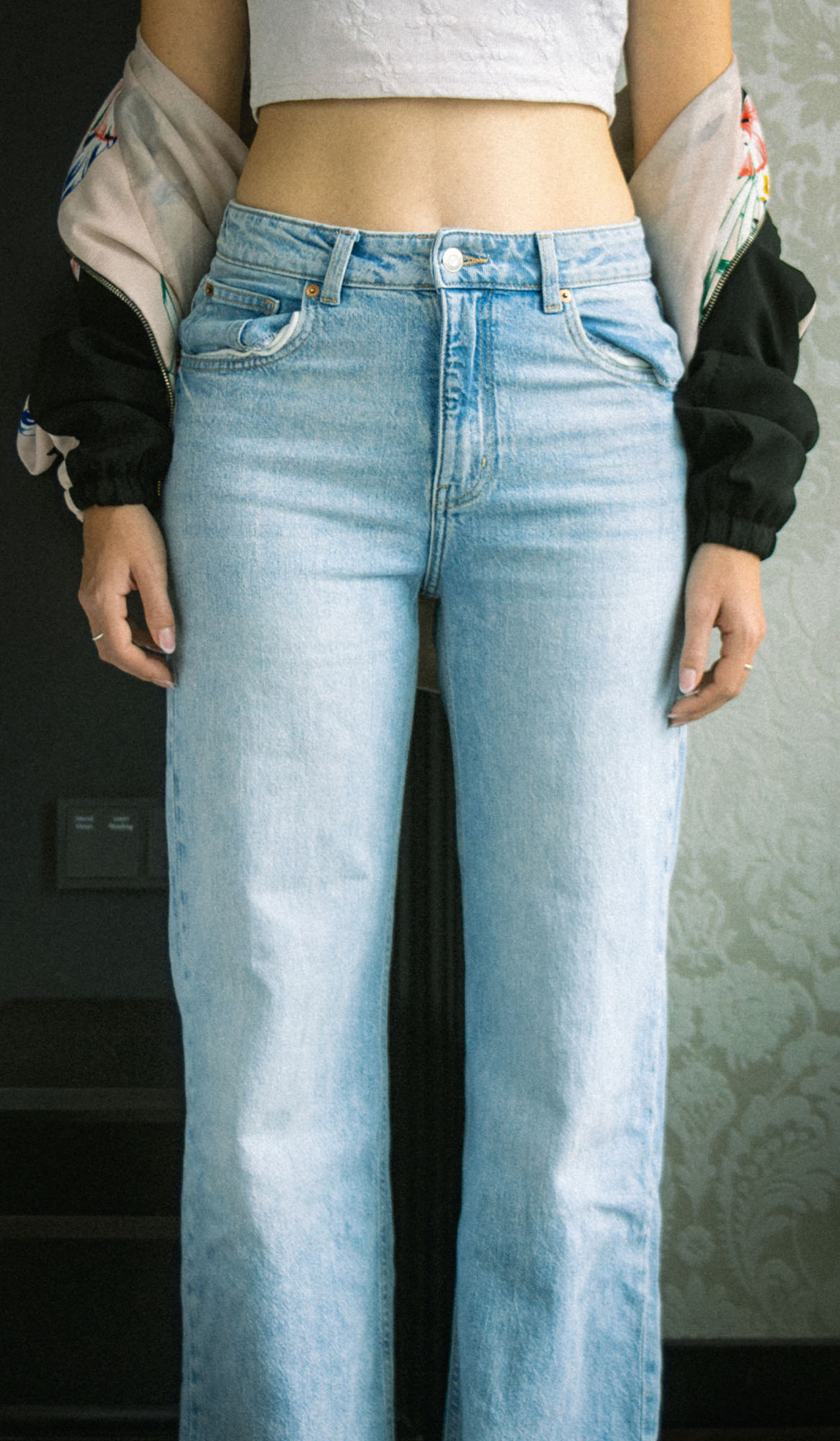
image #1: lisa
image #1 (above)
A young woman looking directly into the camera with a neutral expression, dressed in everyday clothing, standing in a modern hotel room.
image #1 (above)
A young woman looking directly into the camera with a neutral expression, dressed in everyday clothing, standing in a modern hotel room.
image #1 (above)
A young woman looking directly into the camera with a neutral expression, dressed in everyday clothing, standing in a modern hotel room.
image #2 (below)
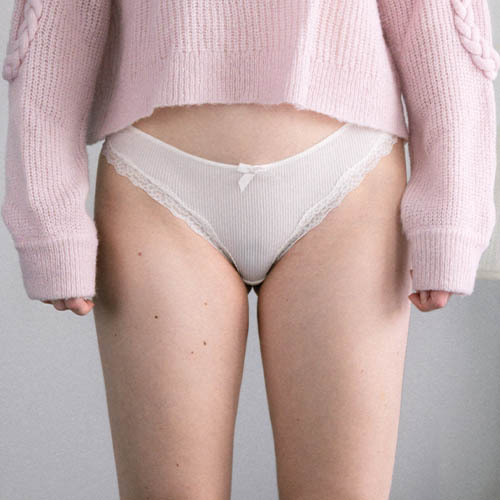
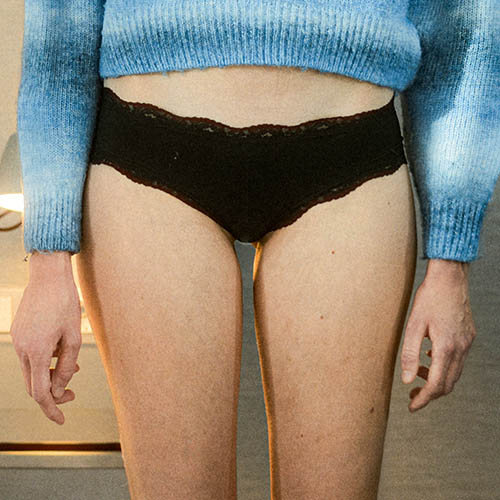
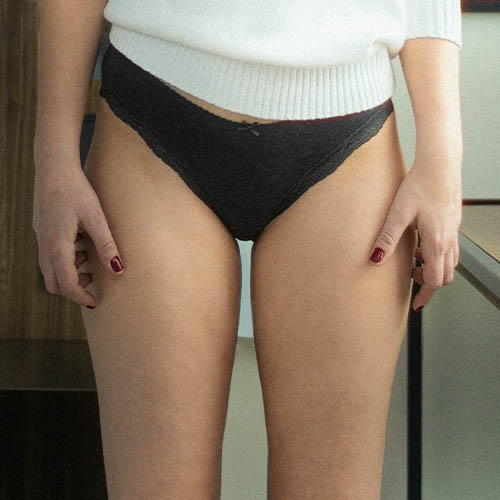
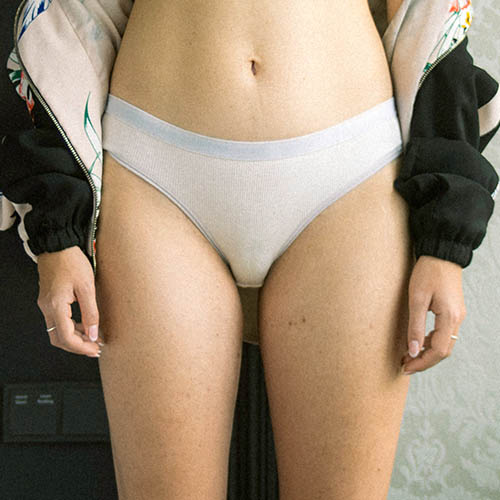
The same young woman stands before the camera, her gaze once again fixed on the lens, but this time, she is without her pants, exposing her bare legs, feet, and underwear. The once-neutral expression has faded; her eyes now seem hollow, reflecting a sense of vulnerability or resignation.
This image highlights the unsettling shift from personal comfort to vulnerability. Her exposed body and lifeless gaze reflect the emotional toll of being reduced to an object, emphasizing the discomfort of being viewed through a voyeuristic lens. The contrast between her earlier confidence and the current state of exposure deepens the sense of objectification, leaving the viewer to question their role in this dynamic.
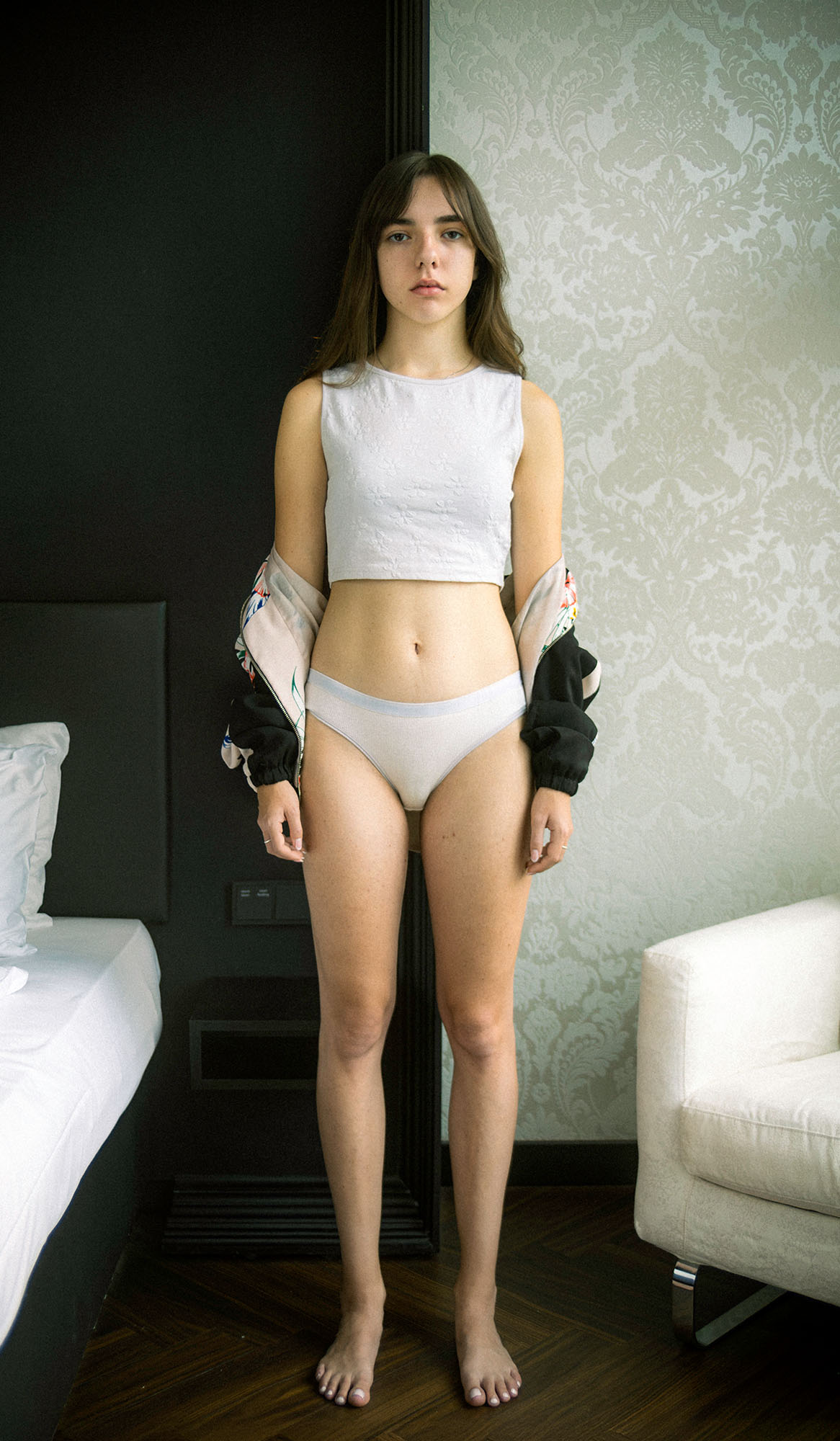
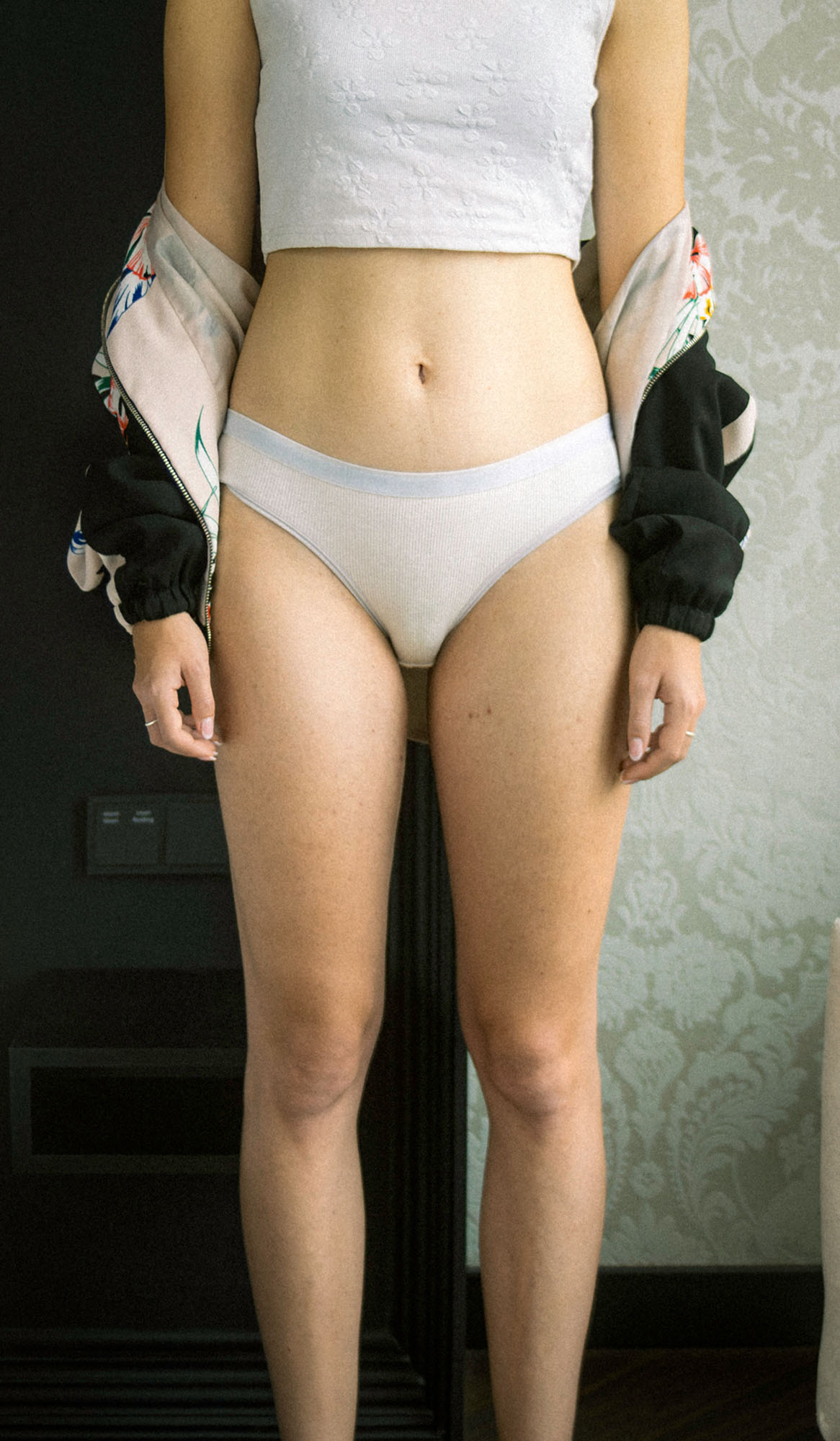
image #2: lisa undressed
This series focuses on teenage girls and young women still navigating identity formation, who are simultaneously idolized as societal beauty standards. It prompts viewers to reflect on these women’s autonomy, the emotional toll they endure, and the complexities of objectification, raising questions about whether it can ever be self-determined.
The photographer also addresses young women working as models in fashion, photography, and media, where they often face intensified pressures of objectification.
PAID DISCOMFORT accuses the viewer, who represents society, of being a voyeur and collaborator in the objectification of young women. Each artwork in the series consists of three art pieces.
This series focuses on teenage girls and young women still navigating identity formation, who are simultaneously idolized as societal beauty standards. It prompts viewers to reflect on these women’s autonomy, the emotional toll they endure, and the complexities of objectification, raising questions about whether it can ever be self-determined.
The photographer also addresses young women working as models in fashion, photography, and media, where they often face intensified pressures of objectification.
PAID DISCOMFORT accuses the viewer, who represents society, of being a voyeur and collaborator in the objectification of young women. Each artwork in the series consists of three art pieces.
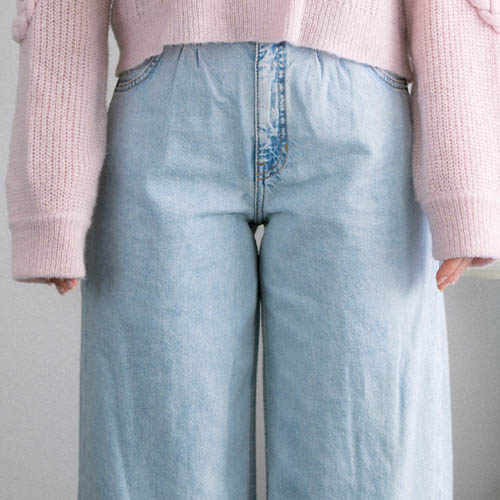
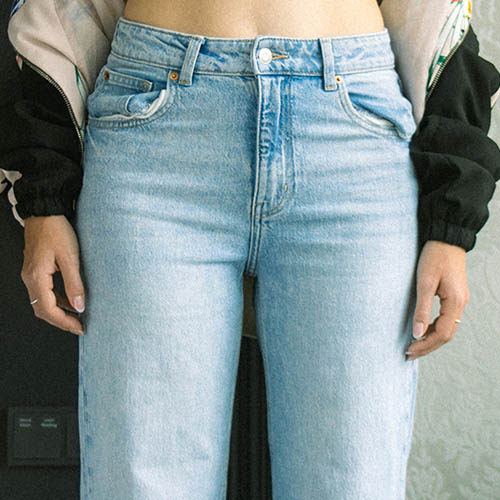
a pair of jeans (below)
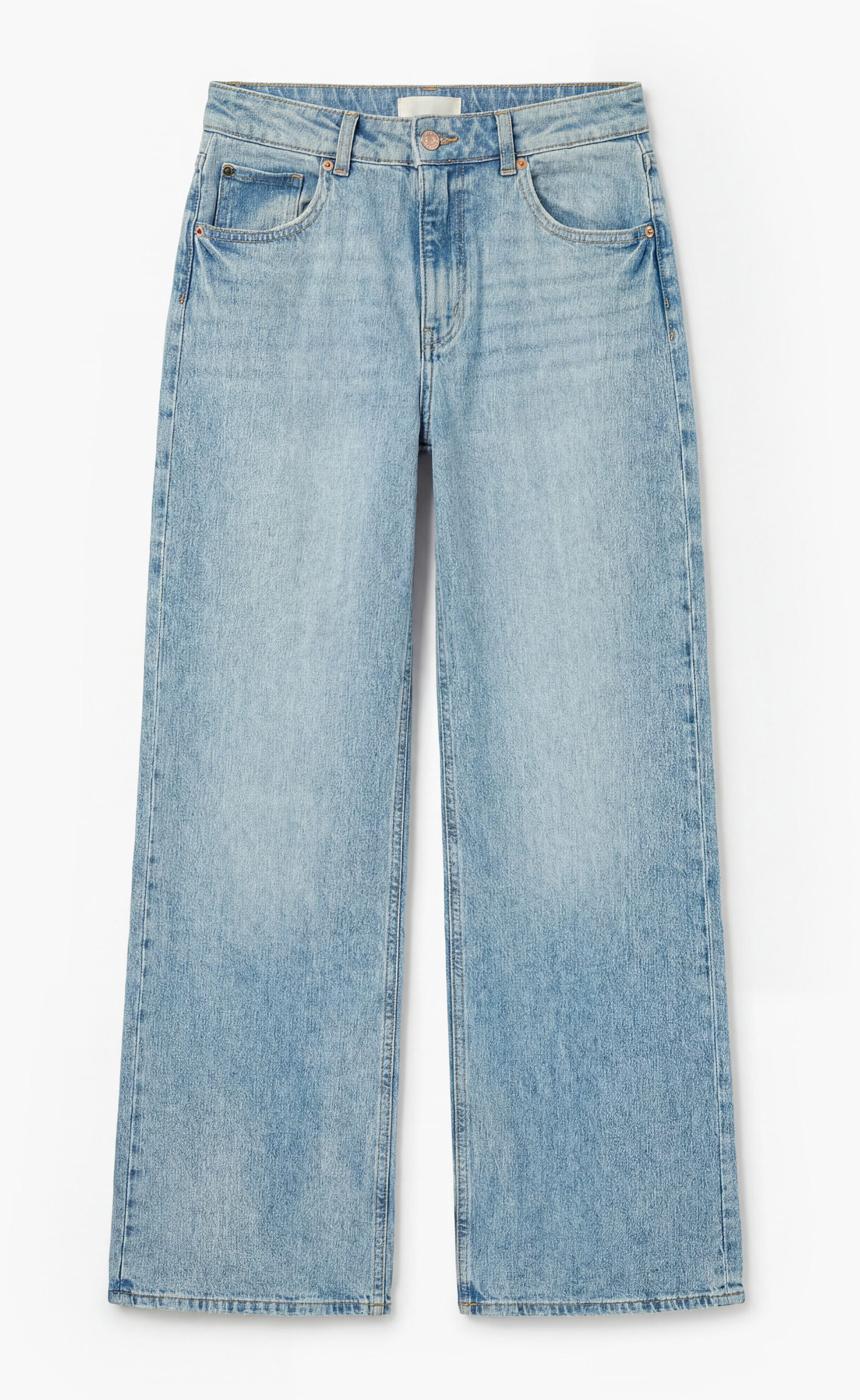
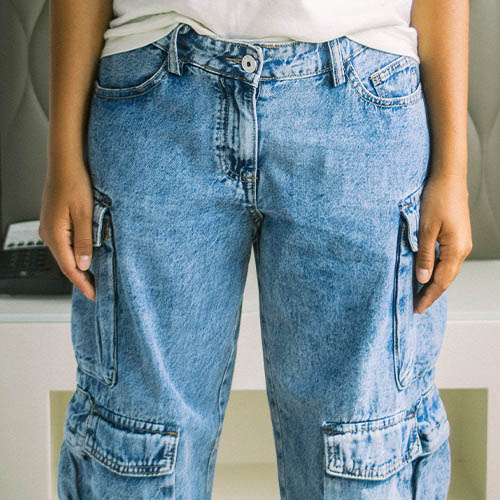
The jeans transcend the confines of photography; they are the original pair worn by the young woman, framed akin to a keepsake or trophy. By framing the jeans, the artist reduces the model to her appearance, emphasizing her legs and hips, rather than acknowledging her full humanity.
a pair of jeans (above)
The jeans transcend the confines of photography; they are the original pair worn by the young woman, framed akin to a keepsake or trophy. By framing the jeans, the artist reduces the model to her appearance, emphasizing her legs and hips, rather than acknowledging her full humanity.
image #2 (left)
The same young woman stands before the camera, her gaze once again fixed on the lens, but this time, she is without her pants, exposing her bare legs, feet, and underwear. The once-neutral expression has faded; her eyes now seem hollow, reflecting a sense of vulnerability or resignation.
This image highlights the unsettling shift from personal comfort to vulnerability. Her exposed body and lifeless gaze reflect the emotional toll of being reduced to an object, emphasizing the discomfort of being viewed through a voyeuristic lens. The contrast between her earlier confidence and the current state of exposure deepens the sense of objectification, leaving the viewer to question their role in this dynamic.
image #2 (left)
The same young woman stands before the camera, her gaze once again fixed on the lens, but this time, she is without her pants, exposing her bare legs, feet, and underwear. The once-neutral expression has faded; her eyes now seem hollow, reflecting a sense of vulnerability or resignation.
This image highlights the unsettling shift from personal comfort to vulnerability. Her exposed body and lifeless gaze reflect the emotional toll of being reduced to an object, emphasizing the discomfort of being viewed through a voyeuristic lens. The contrast between her earlier confidence and the current state of exposure deepens the sense of objectification, leaving the viewer to question their role in this dynamic.
Hanna Böcher:
“I can’t help but wonder who I would be, what relationship I would have with myself, with my appearance, and above all with my body, if I had not experienced the objectification of girls and women from birth, in my own body. Who would I be without all of these influences?”
quote from the foreword of the book “Paid Discomfort”
Hanna Böcher is a German journalist and writer whose work appears in various media outlets. She has previously written for Süddeutsche Zeitung, where she published articles on culture, photography, media, and contemporary topics. She is also a former actress.
Hanna Böcher is a German journalist and writer whose work appears in various media outlets. She has previously written for Süddeutsche Zeitung, where she published articles on culture, photography, media, and contemporary topics. She is also a former actress.
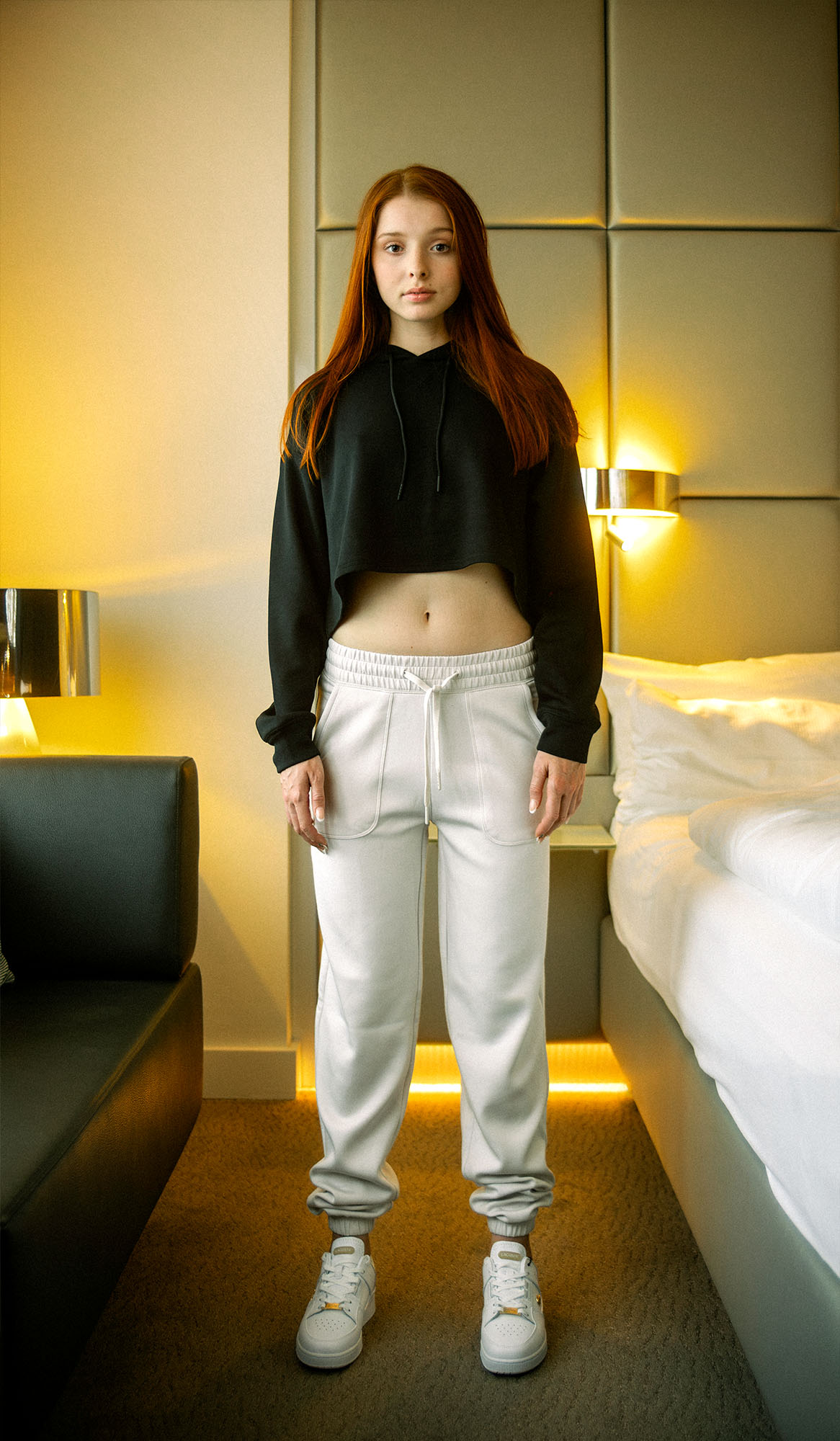
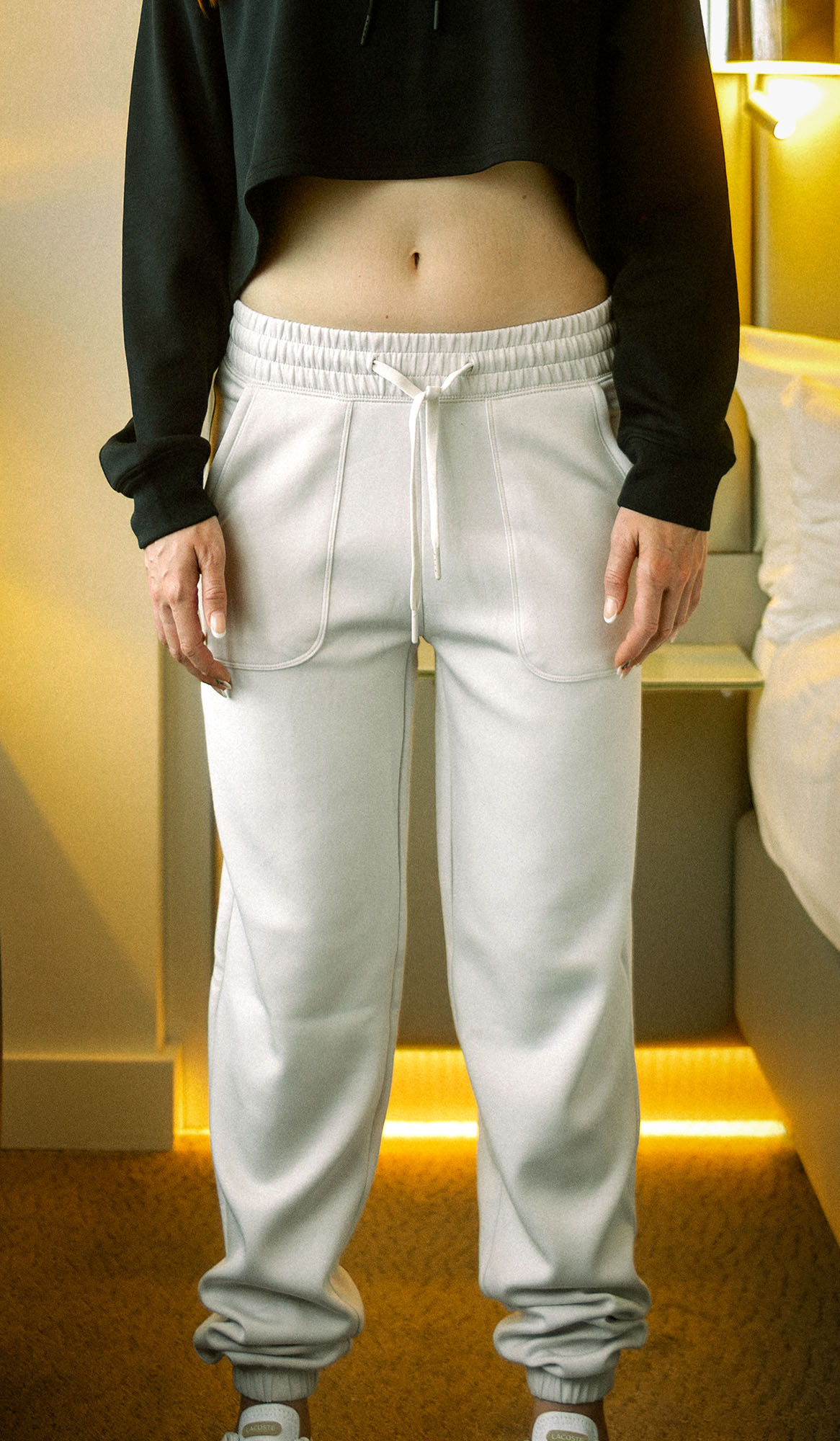
image #1: sophie
the in between
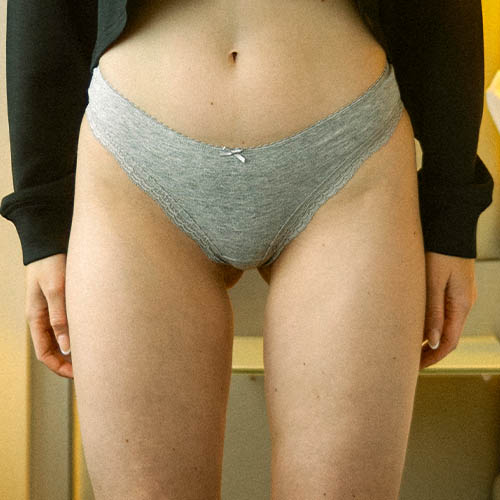
Between the first and second image, the female model undergoes a shift from comfort to discomfort, vulnerability, or potential objectification. Initially neutral and confident in her everyday clothes, being asked by the male photographer to remove her jeans and shoes may have left her feeling exposed, judged, or pressured, as seen in her eyes in the second image. This change reflects the emotional and psychological impact of being pushed beyond her comfort zone, highlighting the power dynamics between her and the viewer.
the in between
Between the first and second image, the female model undergoes a shift from comfort to discomfort, vulnerability, or potential objectification. Initially neutral and confident in her everyday clothes, being asked by the male photographer to remove her jeans and shoes may have left her feeling exposed, judged, or pressured, as seen in her eyes in the second image. This change reflects the emotional and psychological impact of being pushed beyond her comfort zone, highlighting the power dynamics between her and the viewer.
The artist plays an integral role in PAID DISCOMFORT, actively shaping the scenes and ensuring that models, who are of legal age and fully cognizant of the project’s message, are empowered participants.
The carefully curated settings and deliberate compositions challenge viewers to confront their roles as spectators and participants in societal narratives of objectification. The series not only explores the complex dynamics of beauty standards and autonomy but also critiques the artist’s own involvement in portraying and possibly perpetuating these constructs.
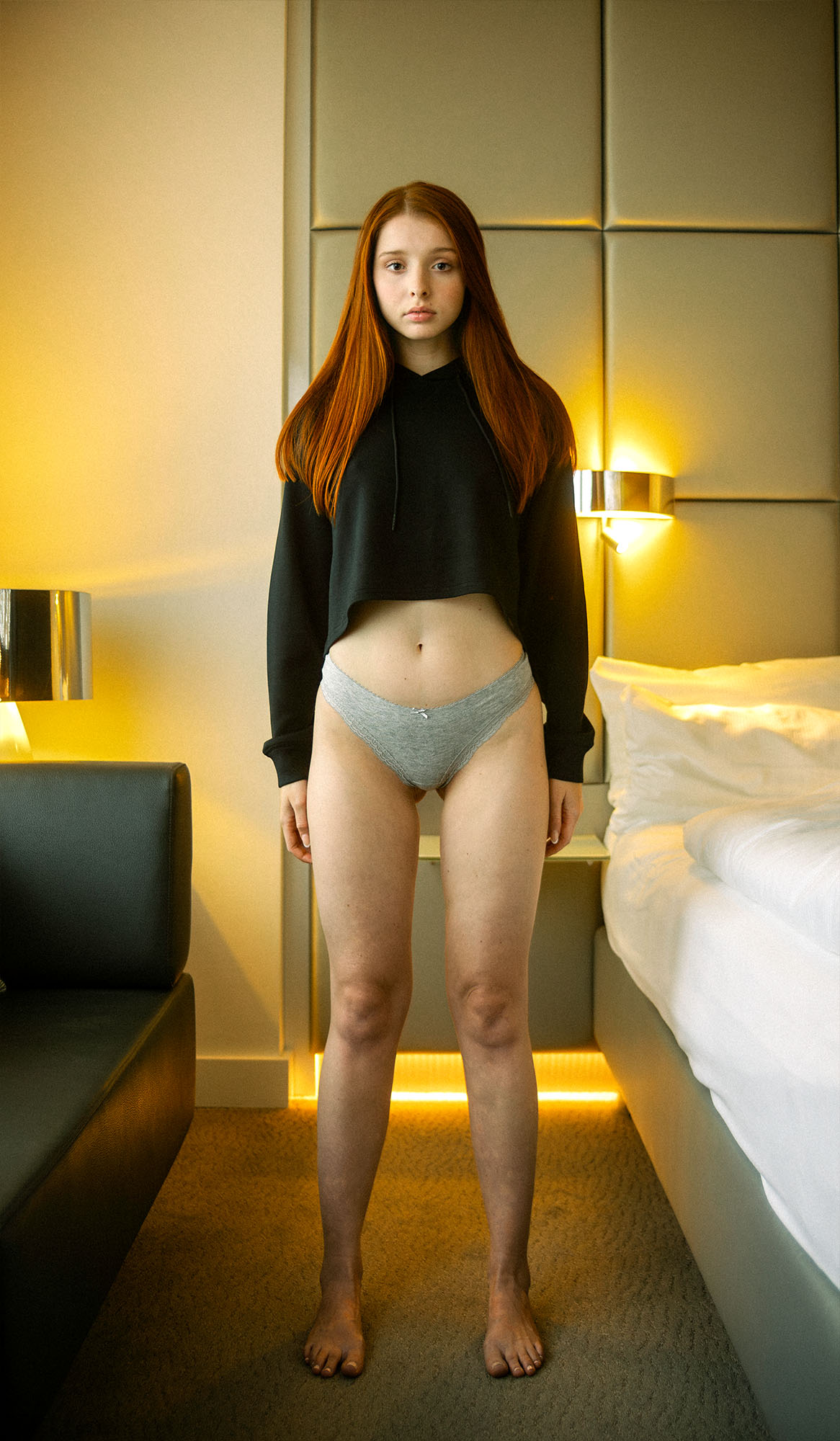
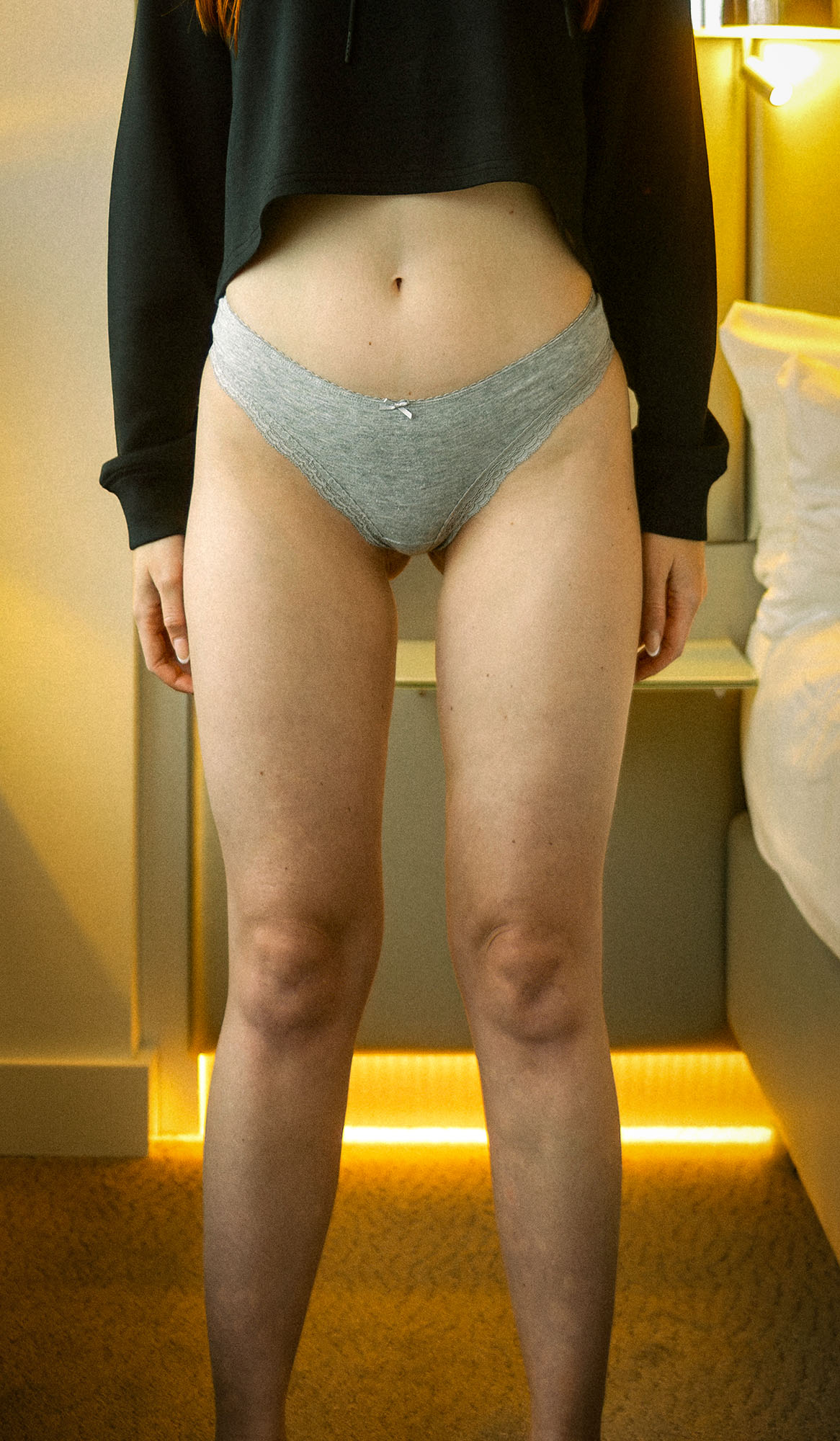
image #2: sophie undressed
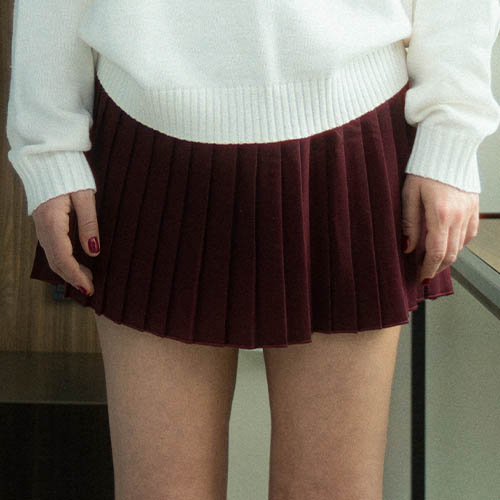
Removed from the body, the jogging pants evoke a market logic in which intimacy is detached, circulated, and consumed. Their display recalls economies where worn garments-underwear, socks, traces of use, are fetishized and exchanged, not for their function but for their proximity to a female body. What is presented is not clothing, but the normalization of desire translated into commodity.
The artist plays an integral role in PAID DISCOMFORT, actively shaping the scenes and ensuring that models, who are of legal age and fully cognizant of the project’s message, are empowered participants.
The carefully curated settings and deliberate compositions challenge viewers to confront their roles as spectators and participants in societal narratives of objectification. The series not only explores the complex dynamics of beauty standards and autonomy but also critiques the artist’s own involvement in portraying and possibly perpetuating these constructs.
The artist plays an integral role in PAID DISCOMFORT, actively shaping the scenes and ensuring that models, who are of legal age and fully cognizant of the project’s message, are empowered participants.
The carefully curated settings and deliberate compositions challenge viewers to confront their roles as spectators and participants in societal narratives of objectification. The series not only explores the complex dynamics of beauty standards and autonomy but also critiques the artist’s own involvement in portraying and possibly perpetuating these constructs.
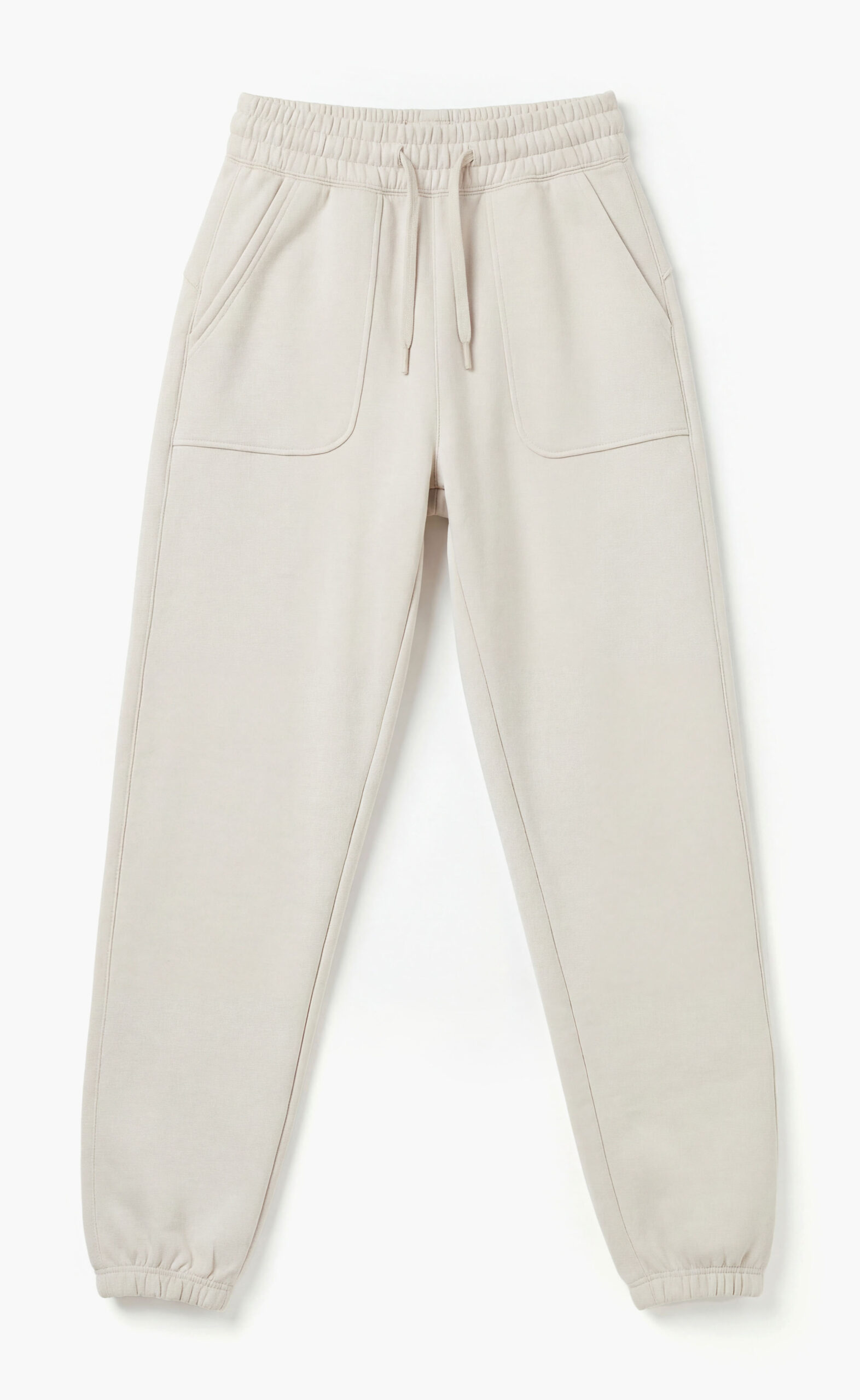
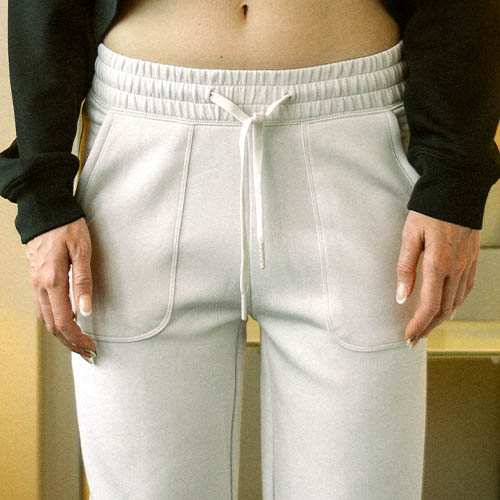
the worn joggers (above)
Removed from the body, the jogging pants evoke a market logic in which intimacy is detached, circulated, and consumed. Their display recalls economies where worn garments—underwear, socks, traces of use—are fetishized and exchanged, not for their function but for their proximity to a female body. What is presented is not clothing, but the normalization of desire translated into commodity.
The series was developed over a period of two years and realized through repeated photo shoots with seven different women. Each shoot followed the same structure and visual setup. Instead of creating variation, the repetition draws attention to what remains constant: the expectations placed on female bodies, the endurance required, and the conditions under which images are produced. By working with different women over time, the project allows shared patterns to become visible without focusing on individual stories alone.
The work is intended to be experienced physically. In exhibitions, large-format photographic prints are shown alongside the original clothing worn during the shoots. This creates a direct connection between image and object, presence and absence, body and material. The garments remain as quiet witnesses to what took place, emphasizing that the images are not isolated representations but part of a broader system of production and consumption.
The project will also be available as a book titled Paid Discomfort, scheduled for release in 2026. The book brings together the photographic series and the displayed objects, expanding the work beyond the exhibition space. In addition, it includes guest contributions by women who share their personal experiences of discomfort, pressure, and boundary violations on film sets and during photo shoots. These texts add lived perspectives to the visual work and underline that the issues addressed are not abstract, but part of everyday realities within the industry.
The series was developed over a period of two years and realized through repeated photo shoots with seven different women. Each shoot followed the same structure and visual setup. Instead of creating variation, the repetition draws attention to what remains constant: the expectations placed on female bodies, the endurance required, and the conditions under which images are produced. By working with different women over time, the project allows shared patterns to become visible without focusing on individual stories alone.
The work is intended to be experienced physically. In exhibitions, large-format photographic prints are shown alongside the original clothing worn during the shoots. This creates a direct connection between image and object, presence and absence, body and material. The garments remain as quiet witnesses to what took place, emphasizing that the images are not isolated representations but part of a broader system of production and consumption.
The project will also be available as a book titled Paid Discomfort, scheduled for release in 2026. The book brings together the photographic series and the displayed objects, expanding the work beyond the exhibition space. In addition, it includes guest contributions by women who share their personal experiences of discomfort, pressure, and boundary violations on film sets and during photo shoots. These texts add lived perspectives to the visual work and underline that the issues addressed are not abstract, but part of everyday realities within the industry.
The series was developed over a period of two years and realized through repeated photo shoots with seven different women. Each shoot followed the same structure and visual setup. Instead of creating variation, the repetition draws attention to what remains constant: the expectations placed on female bodies, the endurance required, and the conditions under which images are produced. By working with different women over time, the project allows shared patterns to become visible without focusing on individual stories alone.
The work is intended to be experienced physically. In exhibitions, large-format photographic prints are shown alongside the original clothing worn during the shoots. This creates a direct connection between image and object, presence and absence, body and material. The garments remain as quiet witnesses to what took place, emphasizing that the images are not isolated representations but part of a broader system of production and consumption.
The project will also be available as a book titled Paid Discomfort, scheduled for release in 2026. The book brings together the photographic series and the displayed objects, expanding the work beyond the exhibition space. In addition, it includes guest contributions by women who share their personal experiences of discomfort, pressure, and boundary violations on film sets and during photo shoots. These texts add lived perspectives to the visual work and underline that the issues addressed are not abstract, but part of everyday realities within the industry.

Hanna Böcher:
“We are so accustomed to sexualizing and objectifying women that it becomes difficult to see their bodies simply for what they are: bodies.”
quote from the foreword of the book Paid Discomfort

Models: Lisa, Sophie, Mathild, Medina, Taissa, Felina
Photographer: MIKAEL VAN LICHTBERG /@mikael_lichtberg
Models: Lisa, Sophie, Mathild, Medina, Taissa, Felina
Photographer: MIKAEL VAN LICHTBERG /@mikael_lichtberg